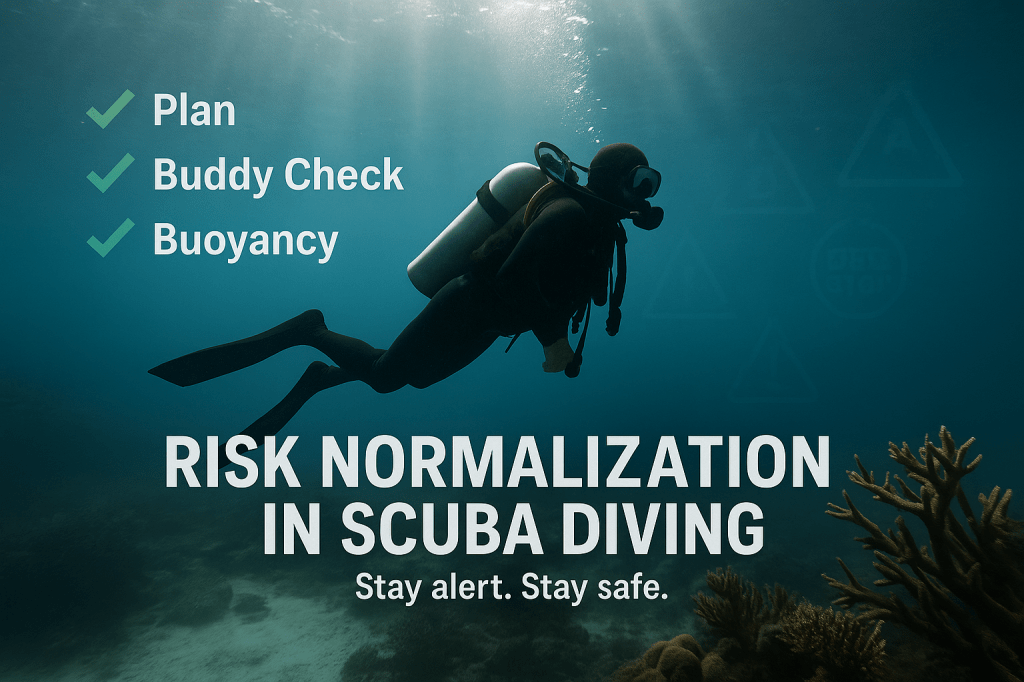
Scuba diving is an exhilarating adventure that opens up a vibrant underwater world, from coral reefs teeming with life to mysterious wrecks steeped in history. However, like any adventure sport, it comes with inherent risks—equipment failure, marine life encounters, decompression sickness, and unpredictable ocean conditions, to name a few. For divers, managing these risks is critical to ensuring a safe and enjoyable experience. One subtle but significant psychological phenomenon that can undermine safety is risk normalization. In this article, we’ll explore what risk normalization is, how it manifests in scuba diving, and practical steps divers can take to counteract it.
What Is Risk Normalization?
Risk normalization, also known as risk habituation, occurs when individuals become desensitized to potential dangers due to repeated exposure to risky situations without negative consequences. Over time, behaviors or conditions that were once perceived as hazardous begin to feel routine or “normal,” leading to a reduced sense of caution. In scuba diving, this can be particularly dangerous because the underwater environment is unforgiving, and complacency can lead to life-threatening mistakes.
For example, a diver who frequently skips pre-dive equipment checks without incident may start to view this shortcut as harmless. Similarly, a diver who regularly exceeds depth limits or dives in strong currents without immediate consequences may begin to see these practices as acceptable, even though they increase the likelihood of accidents.
How Risk Normalization Sneaks Into Scuba Diving
Scuba diving involves a unique blend of technical procedures and environmental awareness, making it fertile ground for risk normalization to develop. Here are some common ways it appears:
- Repetitive Safe Dives
After dozens of successful dives, divers may become overconfident and begin to underestimate the importance of safety protocols. For instance, a diver might think, “I’ve done this dive site 50 times; I don’t need to double-check my air supply or dive plan.” This mindset can lead to overlooking critical details, such as a faulty regulator or an inadequate air reserve. - Peer Influence and Group Dynamics
Diving is often a social activity, and group dynamics can contribute to risk normalization. If a dive group consistently pushes limits—such as diving deeper than planned or ignoring no-decompression limits—newer divers may adopt these behaviors, assuming they’re standard practice. Over time, the group as a whole may normalize unsafe habits. - Familiarity with Dive Sites
Divers who frequently visit the same sites may become overly comfortable, assuming they know the conditions well. However, ocean environments are dynamic, with currents, visibility, and marine life changing unpredictably. Assuming a site is “safe” because past dives went smoothly can lead to inadequate preparation. - Gradual Boundary-Pushing
Divers often push their limits incrementally—extending bottom time slightly, diving a bit deeper, or skipping a rest interval. When these deviations don’t result in immediate harm, divers may perceive them as safe, gradually normalizing riskier behaviors until they become standard practice. - Overreliance on Equipment or Training
Modern scuba gear is highly reliable, and dive training is rigorous, but overconfidence in equipment or skills can lead to complacency. For instance, a diver might neglect emergency procedures, thinking, “My gear is top-notch, and I’m certified; nothing will go wrong.”
The Dangers of Risk Normalization in Scuba Diving
When risks are normalized, divers may engage in behaviors that increase the likelihood of accidents. Some potential consequences include:
- Equipment-Related Incidents: Skipping pre-dive checks can lead to undetected issues, such as leaks or malfunctioning regulators, which can cause emergencies underwater.
- Decompression Sickness (DCS): Ignoring no-decompression limits or ascending too quickly can increase the risk of DCS, a potentially serious condition caused by nitrogen bubbles forming in the body.
- Out-of-Air Situations: Failing to monitor air supply closely or plan for adequate reserves can lead to running out of air, forcing an emergency ascent or reliance on a buddy’s alternate air source.
- Environmental Hazards: Underestimating currents, waves, or marine life can result in divers becoming separated, trapped, or injured.
- Delayed Response to Emergencies: Complacency can slow reaction times, making it harder to manage unexpected situations like entanglement or equipment failure.
Data from the Divers Alert Network (DAN) highlights the impact of human error in diving accidents. In their 2020 Annual Diving Report, DAN noted that human factors, such as poor decision-making and failure to follow safety protocols, contributed to a significant portion of incidents. Risk normalization plays a role in these errors by dulling divers’ awareness of potential dangers.
How to Counteract Risk Normalization
Preventing risk normalization requires conscious effort and a commitment to maintaining safety standards, no matter how experienced or comfortable a diver feels. Here are practical strategies to stay vigilant:
- Stick to Safety Protocols Religiously
- Always perform pre-dive checks (e.g., BWRAF: Begin With Review And Friend—Buoyancy, Weights, Releases, Air, Final OK). Treat every dive as if it’s your first, ensuring all equipment is inspected and dive plans are clear.
- Follow dive tables or computer guidelines for depth, bottom time, and ascent rates, even if you’ve “gotten away” with bending the rules before.
- Refresh Training Regularly
- Take refresher courses or advanced training to reinforce safety habits and update skills. For example, a Rescue Diver course can sharpen emergency response techniques, reminding divers of potential risks.
- Practice emergency skills, like sharing air or performing controlled ascents, in controlled environments to maintain readiness.
- Plan Every Dive Thoroughly
- Before each dive, review the site’s conditions, weather, and potential hazards, even if you’ve dived there before. Use a checklist to ensure nothing is overlooked.
- Discuss emergency procedures with your buddy, including out-of-air scenarios, lost buddy protocols, and hand signals.
- Monitor Your Mindset
- Be aware of complacency creeping in. Ask yourself, “Am I cutting corners because it’s worked before, or because it’s truly safe?” If you notice yourself rationalizing risky behavior, pause and reassess.
- Set personal limits (e.g., maximum depth, minimum air reserve) and stick to them, regardless of peer pressure or past experiences.
- Learn from Near-Misses
- Treat close calls—such as low air or unexpected currents—as learning opportunities rather than flukes. Analyze what went wrong and adjust your habits to prevent recurrence.
- Share experiences with your dive community to raise awareness and encourage a culture of safety.
- Dive with Responsible Buddies
- Choose dive partners who prioritize safety and are willing to call out risky behavior. A good buddy can help keep you accountable and reinforce safe practices.
- Avoid diving with groups that consistently push limits or dismiss safety concerns, as their influence can normalize unsafe habits.
- Stay Informed About Risks
- Read incident reports from organizations like DAN to understand common causes of accidents. Real-life examples can serve as a sobering reminder of diving’s risks.
- Stay updated on best practices through dive magazines, forums, or local dive shops.
Building a Culture of Safety in the Dive Community
Risk normalization isn’t just an individual issue—it can permeate entire dive communities. Dive operators, instructors, and experienced divers play a crucial role in fostering a safety-first culture. Operators should enforce strict safety standards, such as mandatory briefings and equipment checks, while instructors can emphasize the importance of vigilance in training. Experienced divers can lead by example, modeling safe behaviors and mentoring newer divers.
Encouraging open discussions about near-misses and accidents without judgment can also help. By sharing lessons learned, divers can collectively reinforce the importance of staying alert and prepared, countering the tendency to normalize risks.
Conclusion: Staying Sharp for Safe Diving
Scuba diving offers unparalleled opportunities to explore the ocean’s wonders, but it demands respect for its risks. Risk normalization is a subtle trap that can lull even experienced divers into a false sense of security, increasing the chances of accidents. By recognizing the signs of complacency, adhering to safety protocols, and fostering a culture of vigilance, divers can keep risks in check and enjoy the underwater world safely.
Whether you’re a novice diver or a seasoned pro, treat every dive as a fresh opportunity to prioritize safety. Stay sharp, stay prepared, and keep the ocean’s magic alive for countless dives to come.
 Motus Aquaticus
Leave a comment