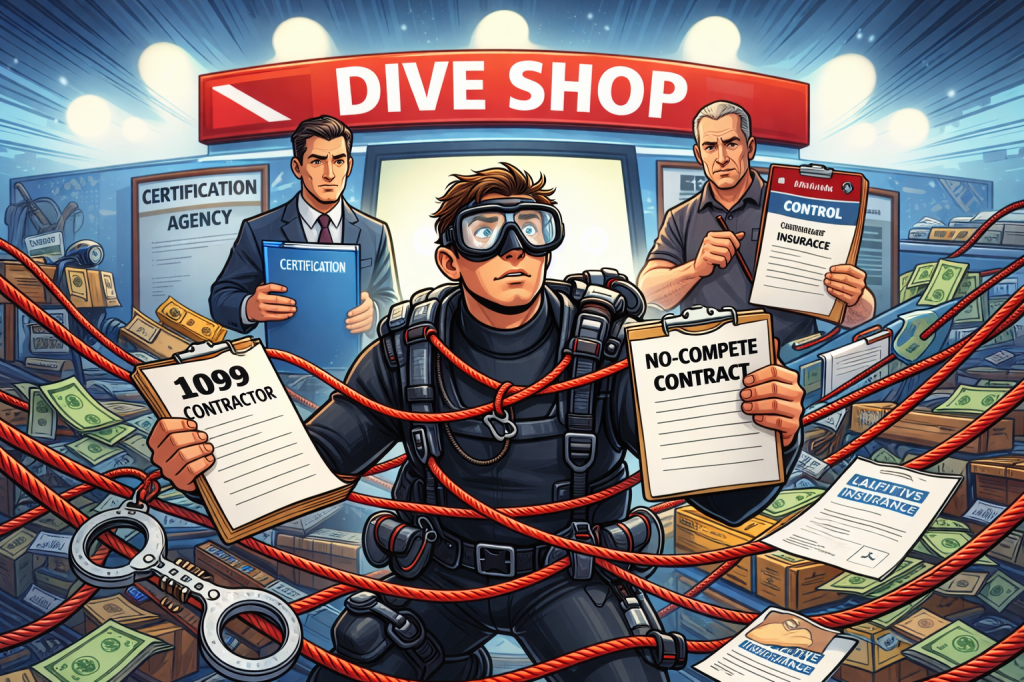
The Illusion of Independence: Scuba Instruction and the 1099 Trap
In the recreational scuba industry, there is a deeply ingrained system that has become so normalized, it often escapes scrutiny. At its core is a questionable relationship between scuba instructors, certification agencies, and retail dive shops—one that raises serious concerns about fairness, control, and the misuse of independent contractor classifications.
The 1099 Label vs. Reality
Most recreational scuba instructors are classified as 1099 independent contractors. On paper, this suggests freedom—control over one’s schedule, business operations, and professional autonomy. In reality, however, many instructors experience something entirely different.
A true independent contractor operates their own business, markets their own services, sets their own prices, and works with multiple clients without restriction. But in the scuba industry, instructors often lack these freedoms entirely. Instead, they function more like employees—without receiving any of the protections or benefits that employment provides.
Certification Agencies and Forced Affiliations
A significant factor contributing to this imbalance is the requirement from some certification agencies that instructors affiliate with a retail dive shop in order to teach. Without this affiliation, instructors may find themselves unable to conduct classes, certify students, or even remain active in the industry.
This requirement effectively places control of an instructor’s livelihood into the hands of the dive shop. If the shop chooses to sever ties, the instructor’s ability to work can disappear overnight.
Retail Dive Shops: Control Without Responsibility
Retail dive shops benefit heavily from classifying instructors as 1099 contractors. By doing so, they avoid:
- Paying employment taxes
- Contributing to Social Security and Medicare
- Providing workers’ compensation insurance
- Offering health benefits or paid time off
Yet despite this classification, many dive shops exert significant control over instructors. This often includes:
- Assigning classes and controlling schedules
- Dictating how courses are taught, even beyond agency standards
- Requiring instructors to use or promote specific equipment sold in-store
- Mandating participation in sales training and retail-driven practices
These expectations mirror those of an employer-employee relationship, not an independent contractor arrangement.
Liability Insurance: Another Layer of Dependence
Scuba instructors are required to carry liability insurance to remain active. In many cases, instructors are added to a dive shop’s blanket policy. While this may seem convenient, it often comes with limitations—coverage may only apply when working under that specific shop.
This creates another form of dependency. If an instructor leaves or is removed from the shop, they may suddenly find themselves without adequate insurance coverage, further limiting their ability to operate independently.
Non-Compete Agreements and Blackballing
Perhaps most concerning is the growing use of non-compete agreements imposed on instructors classified as independent contractors. These agreements can prevent instructors from working with other shops or teaching independently within a certain geographic area.
In an industry where dive shops may be scarce, this can be devastating. If a dive shop decides to stop assigning classes or removes an instructor’s affiliation with a certification agency, the instructor may have no viable path to continue working.
In effect, a single business can “blackball” an instructor—cutting off both income and opportunity.
Industry Normalization of Control
What makes this situation even more troubling is that some certification agencies actively reinforce these dynamics. Training materials and business guidance provided to dive shops may include strategies for managing and controlling instructional staff.
This can include guidance on:
- Standardizing how instructors present courses beyond required training standards
- Encouraging brand loyalty to in-store products
- Integrating sales tactics into instruction
- Structuring instructor relationships to favor shop control
These practices blur the line between independent contractor and employee even further.
A Call for Transparency and Change
The scuba industry thrives on trust, safety, and professionalism. Yet behind the scenes, many instructors operate within a system that contradicts those very values.
If instructors are to be classified as independent contractors, they should be granted the independence that classification implies. Alternatively, if dive shops wish to maintain control over instructors’ work, then those instructors should be properly classified as employees and afforded the benefits and protections that come with that status.
Greater transparency, industry-wide standards for fair classification, and open discussion are essential steps toward a more equitable system.
Final Thoughts
Scuba instruction is more than a job—it’s a passion, a lifestyle, and a responsibility. Instructors deserve a system that respects their professionalism and supports their ability to thrive.
Until meaningful changes are made, the current model will continue to leave many instructors navigating not just the underwater world—but an uneven and often unjust professional landscape.
 Motus Aquaticus
Leave a comment